Sloped Blocks Create Real Fencing Challenges
A flat block is straightforward to fence. A sloped block is not, and the difference matters more than most homeowners expect before they get a quote.
The gradient of your land affects which fencing method works, how much material is needed, how posts are set, and what the finished fence actually looks like. Getting this wrong early on leads to gaps at the base, panels that look uneven, or a fence that shifts over time.
Understanding your options before you speak to a contractor puts you in a much stronger position to make a decision that suits your block, your budget, and your neighbours.
The Two Main Methods for Sloped Sites
There are two standard approaches used on sloped or uneven ground: stepped fencing and raked fencing. Each suits different site conditions, and neither is universally better than the other.
Stepped Fencing
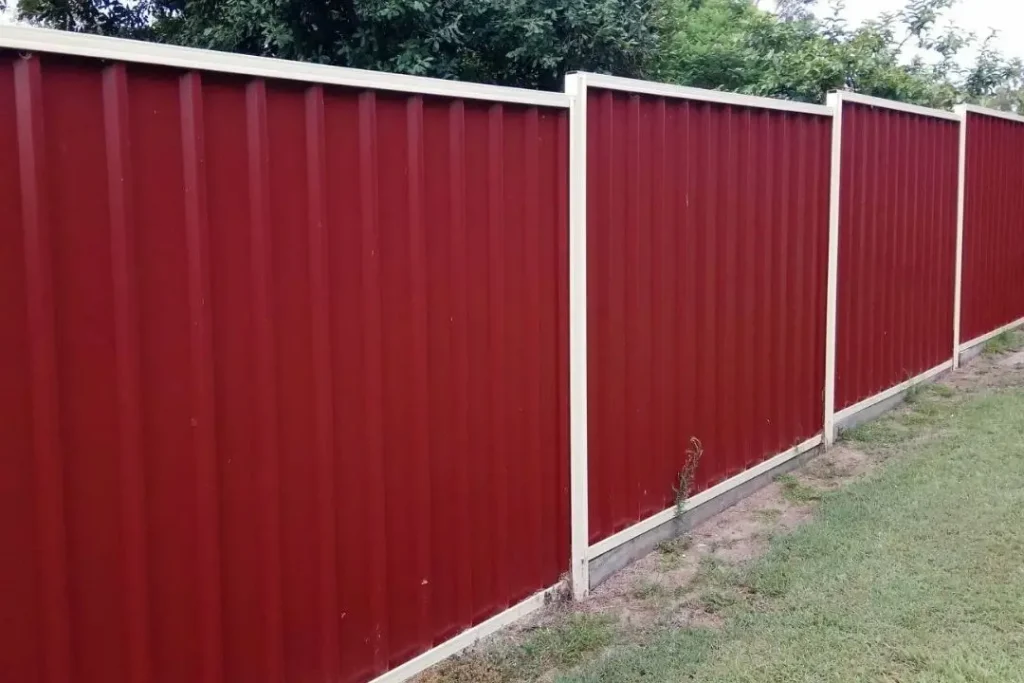
Stepped fencing keeps each panel level and horizontal, but drops in height at intervals to follow the slope of the land. The result looks like a staircase effect when viewed from the side.
Each step creates a triangular gap at the base of the panel where the ground falls away. On a steep block, those gaps can be significant, which matters if you have pets or small children.
Stepped fencing works well with materials that come in fixed panel sizes, such as Colorbond. It is also generally easier to install and can be more cost-effective on moderate slopes.
Raked Fencing
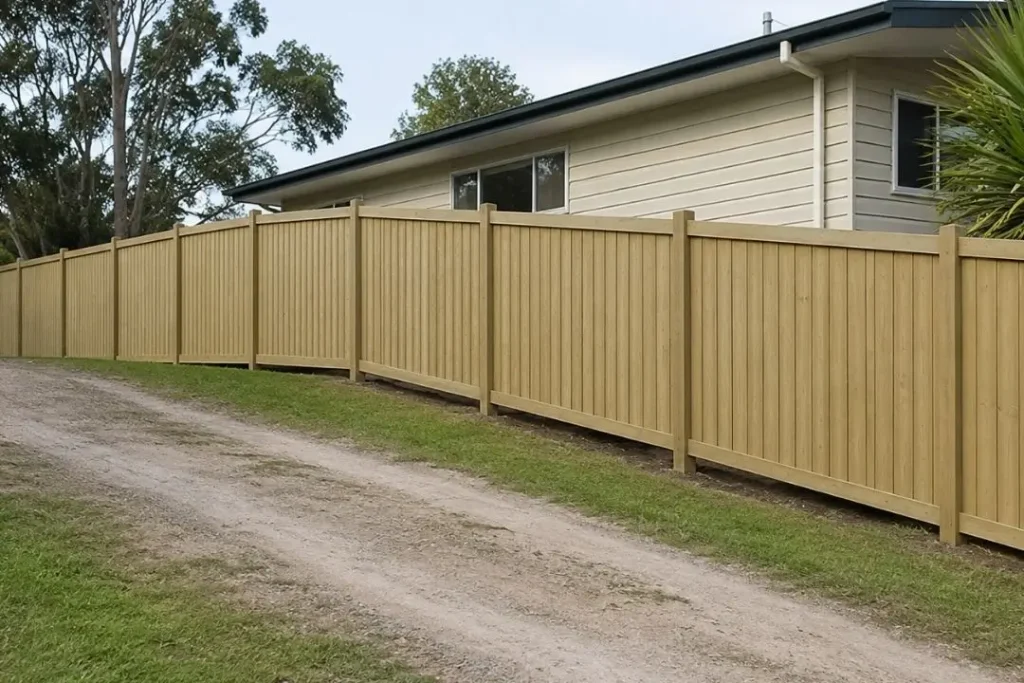
Raked fencing follows the slope of the ground continuously, with the top and bottom rails running at an angle rather than horizontally. There are no steps and no gaps at the base.
This method suits blocks with a consistent gradient and is a better choice where ground-level security is a priority. It tends to suit timber fencing more naturally, since timber can be cut to follow a rake more easily than pre-formed metal panels.
The difference between raked and stepped fencing comes down to how the fence responds to the land beneath it, and that choice shapes everything from appearance to cost to ongoing maintenance.
What Drives Up the Cost on a Sloped Block
Fencing a sloped yard almost always costs more than fencing a flat one. The reasons are practical, not arbitrary.
Posts need to be set at different heights to compensate for the gradient. On steep sections, some posts may need to be significantly longer than standard, which adds material cost. Concrete footings also require more care to ensure posts sit straight rather than following the angle of the ground.
Labour time increases because each panel or section requires individual adjustment. A crew cannot simply repeat the same process down the line the way they can on flat ground. The more variation in the slope, the more time the job takes.
If your block has sections that change direction or gradient mid-run, expect the cost to reflect that complexity. A quote that does not account for this is likely to change once work begins.
Gaps at the Base: A Problem Worth Solving Early
The gap between the bottom of a fence and the ground is one of the most common issues on sloped blocks, particularly with stepped fencing. On a gentle slope it may be minor. On a steep block it can be large enough for a dog to pass through.
There are a few ways to address this. Some homeowners use infill panels or gravel boards to close the gap without altering the fence itself. Others build a small retaining wall or garden bed along the fence line to raise the ground level.
If you are considering plants along the base of the fence, choose species that can handle sloped ground, moisture changes, and nearby retaining structures. The right plants suited to fences and retaining walls can soften the look of the boundary without creating root issues around posts or footings over time.
Choosing the Right Material for Your Slope
Material choice matters more on a sloped block than on flat ground. Not every fencing product adapts equally well to a gradient.
Colorbond fencing is one of the most popular choices in South East Queensland, and it handles stepped installations well. It is durable, low maintenance, and holds up in Queensland’s climate. However, it does not rake easily, so if your block requires a continuous follow of the slope, Colorbond may not be the right fit without custom fabrication.
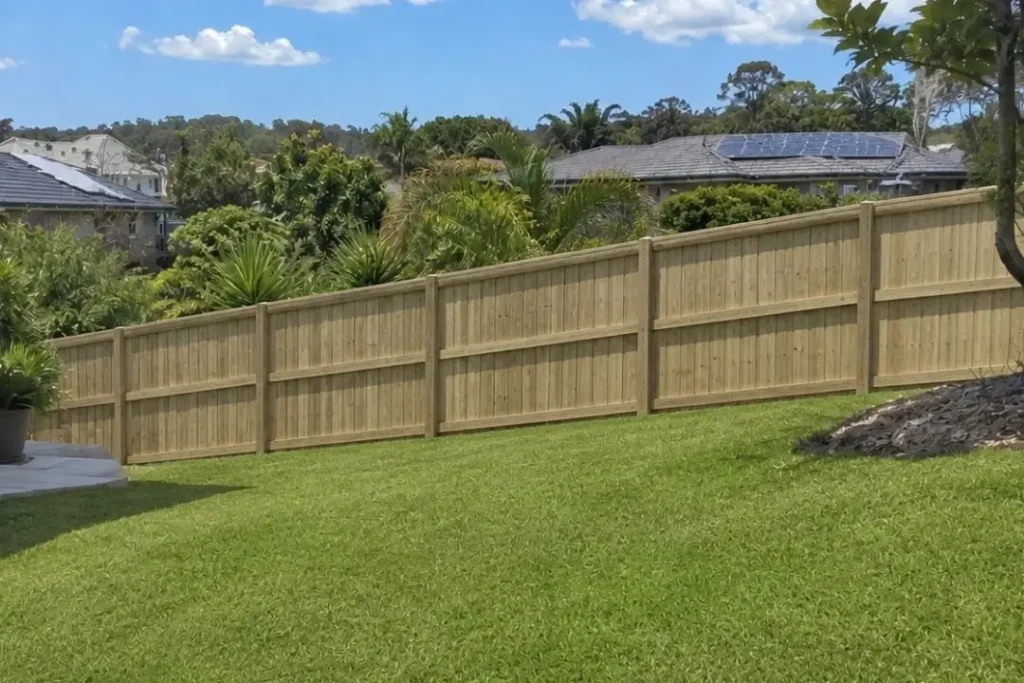
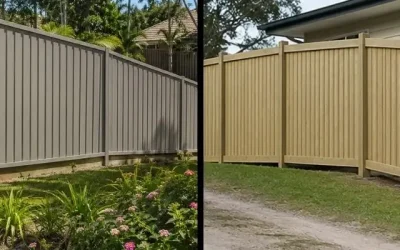
Timber is more flexible. Timber paling fences can be cut to length and the rails can follow a rake, making timber a practical option for blocks with a consistent slope. The trade-off is that timber requires more maintenance over time, particularly in areas with high humidity or heavy rainfall. If you are weighing up your options, the comparison between Colorbond and timber fencing covers the key differences in durability, cost, and upkeep.
Boundary Lines and Neighbour Agreements
On a sloped block, the boundary line does not change, but the visual impact of the fence on your neighbour’s side can be quite different from what it looks like on yours. A fence that sits at a comfortable height on your side may appear much taller from the lower side of the slope.
This is worth discussing with your neighbour before work begins, not after. Queensland’s Neighbourhood Disputes Resolution Act sets out how fencing costs and decisions are shared between adjoining owners, and a conversation early on avoids disputes later.
If you are in the Logan area and unsure how boundary fencing rules apply to your specific situation, speaking with a local fencing contractor who knows the area is a practical first step.
Sloped Blocks in Logan and Surrounding Areas
Logan and South Brisbane include a wide range of terrain. Some suburbs sit on relatively flat ground, while others have significant elevation changes across a single property. The outer areas tend to have more variation, and blocks in those locations often require more planning before fencing begins.
For example, fencing in Jimboomba often involves larger rural-style blocks where slopes, drainage lines, and property boundaries all need to be considered together before a fence line is confirmed.
A contractor familiar with local conditions will know what to look for on site before quoting, which reduces the chance of surprises once work is underway.
What to Sort Out Before You Get a Quote
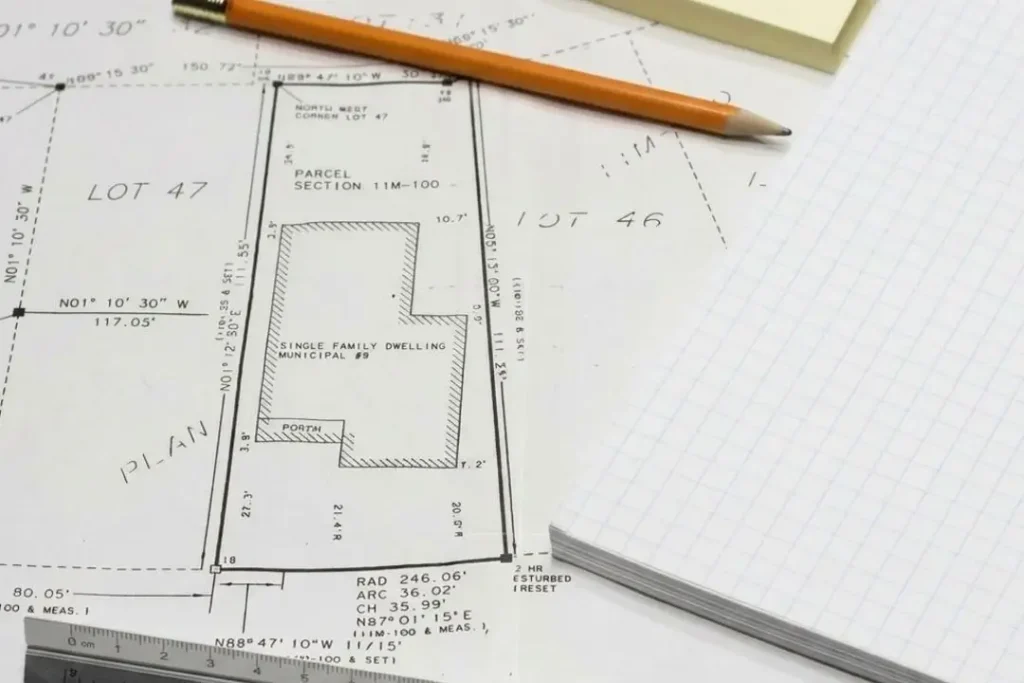
A few things are worth having ready before you contact a fencing contractor. Knowing your block’s gradient, even roughly, helps a contractor give you a more accurate quote from the start.
If you have a survey plan, locate it. It will confirm your boundary lines, which matter on a sloped block where the fence line may need to step around drainage easements or other constraints.
Think about what the fence needs to do. If security and containment are priorities, a raked fence with no base gaps may be the better option. If appearance is the main concern and the slope is gentle, a stepped Colorbond fence may suit the block well and cost less to install.
Ready to Fence Your Sloped Block?
Sloped blocks are manageable with the right approach and the right contractor. The key is getting accurate advice early so the method, material, and quote all reflect what your block actually requires.
For a fencing company Logan and South Brisbane homeowners rely on for sloped and uneven sites, call us on (07) 3132 0038 for advice on your specific block and for a free on-site quote.